
The Budget sets out a comprehensive vision.

All these measures will revitalise the manufacturing sector, which has been in doldrums.

The final and most significant reset in the relations between the government and the RBI is the manner in which the process of appointing the governor and deputy governors of the central bank has been changed.

What is required from government is intellectual framework.

The system envisaged under the FRDI Bill, if implemented properly, would help improve the efficiency of capital allocation without harming consumers, and without risking the stability of financial firms, says Ajay Shah.

This gains importance in the backdrop of speculation on a second term for Raghuram Rajan.

What stood out in his 15-year journey as a member of the political executive at the Centre was his glowing record as India's most successful and effective finance minister. Both as prime minister and finance minister, he understood the importance of gradualism, except when the economy or the polity was in a crisis.

A long crisis with a lack of sound short-term, long-term actions can result in sluggish growth in India, similar to that in Japan.

'The hour is very late, and the choice between triumph and tragedy knocks at our door,' says Ajay Shah.

'Clearly, the depositors of cooperative banks need the maximum protection.'

The abolition of wealth tax is again a welcome step.

'It's still very early. I have just been handed over the matter and therefore I haven't formed any views on it as yet,' Justice B N Srikrishna tells Pavan Lall.
Chetan Ghate, Pami Dua and Ravindra Dholakia have been appointed for 4 years
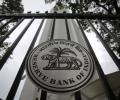
The deadline for officers to decide on their career path in the biggest organisational rejig in the central bank's 85-year history ends on January 31. The immediate fallout could be its disruptive impact on the supervisory process for 2020 -- and beyond -- given the manpower shortfall, even as more entities are set to come under closer central bank scrutiny.

Watal panel had suggested an independent payments regulator be set up.

Before considering reducing the freedom of private investors in the derivatives market, we need to check if the maladies in markets elsewhere exist in India, says Susan Thomas.

Economic reforms seem to be on a slow train, while good old fiscal populism is alive and flourishing.

'The critics are getting carried away.' 'The challenge for the RBI is not any erosion of autonomy caused by demonetisation.' 'It's the whole attempt to reduce the RBI's stature and role that has been under way,' says T T Ram Mohan.

The panel's report also provides a range for fiscal deficit and debt path of both the Union and states and also recommended additional borrowing room to states based on performance in power sector reforms. Finance Commission is a constitutional body that gives suggestions on Centre-state financial relations. The report of the 15th Finance Commission was tabled in the Lok Sabha by Finance Minister Nirmala Sitharaman.
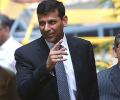
Raghuram Rajan speaks on the unscheduled rate cut.

RBI's out-of-turn rate cut has surprise few economists.

As the Centre pushes reforms in the power sector, especially for the beleaguered electricity distribution segment, several states, especially those ruled by Opposition parties, are clamouring against it. Maharashtra, West Bengal, Tamil Nadu, and Kerela have voiced their reservations against the proposed amendments to the Electricity Act, 2003. The irony is the states opposing the amendments on the ground of threat of privatisation already have private partnerships in power supply. The proposed Bill was slated to be placed on the floor of Parliament in the Monsoon session. But it still awaits Cabinet approval amid several states complaining that they have been not consulted on the issue.

Finding itself trapped in a cul de sac, all things considered, a negotiated climbdown at this juncture seems the only sensible course available for the Centre, suggests Virendra Kapoor.
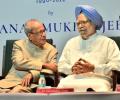
What Shekhar Gupta would have really liked to know from Pranabda: Why did Sonia prefer Dr Singh to him as PM? Why did he deny finance first, why did he accept it 5 years later, and why did he make such a mess of it? How did he force Sonia to nominate him for President and not Hamid Ansari? And how does he justify that most toxic legacy -- the Vodafone tax amendment?

He said the short term macroeconomic priorities of the RBI continue to focus on bringing down inflation towards the government-set target of 4 per cent

Sahil Kapoor of Edelweiss Retail Capital Market Research says that setting up a monetary policy committee should have been the first step. And the central bank could have moved towards a formal inflation targeting mechanism after the processes and data sets are in place.

There is no reason for keeping an entire ministry with a total staff strength of 2,300, just for the oversight of a few aviation sector laws and regulatory bodies, notes A K Bhattacharya.

There are conflicting signs on India's investment cycle.

'We have set out a timetable to reduce income tax rates for all incomes below Rs 50 lakh, and to progressively eliminate the surcharges on income above Rs 50 lakh, by 2024.' The Budget speech past CII president Naushad Forbes wants to hear.

This Budget plans for an increase to 10.3% of GDP from 9.9%.

'Will 'Make in India' be able to harness the demographic dividend so it does not become a disaster?' 'Will 'Digital India' live up to the lofty promises the government and private sector made as part of its recent launch?'
Four specific areas will be watched carefully in the first half of FY16

Finance Minister Nirmala Sitharaman on Monday presented the Budget for 2021-22 in the Lok Sabha that is expected to provide relief to the pandemic-hit common man as well as focus more on driving economic recovery through higher spending on healthcare, infrastructure and defence amid rising tensions with neighbours, As India emerges from the COVID-19 crisis, the ninth Budget under the Modi government, including an interim one, is widely expected to focus on boosting spending on job creation and rural development, generous allocations for development schemes, putting more money in the hands of the average taxpayer and easing rules to attract foreign investments.
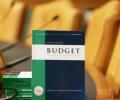
Experts have started giving comments on provisions that the govt must make in Budget 2016-17.

There will very little direct impact from the US Fed's rate hike this time, as we are well prepared both to handle liquidity, outflow of FII funds and managing our currency. But that doesn't mean India will be out of the woods anytime soon, says M V Subramanian.

The truth is that few ministries in the Modi sarkar are working on new and updated legislation of any kind.
FIXES BY THE GOVERNMENT: Energy price fixed, tax issues linger.
The next general election is more than three years away. Yet, the Centre appears to be reluctant to take any bold move that might annoy influential sections of the electorate.

The government has unleashed a slew of reforms to attract greater investments including higher foreign direct investment in defence and opening up the railways infrastructure sector, relaxed labour laws, launched campaigns like the Make in India for re-invigorating manufacturing, Clean India and Digital India, among others.

The government has provided a long-term vision.
